2026-09-18 · Rick Malone
Sump Pump Repair in Toledo After Spring Thaw
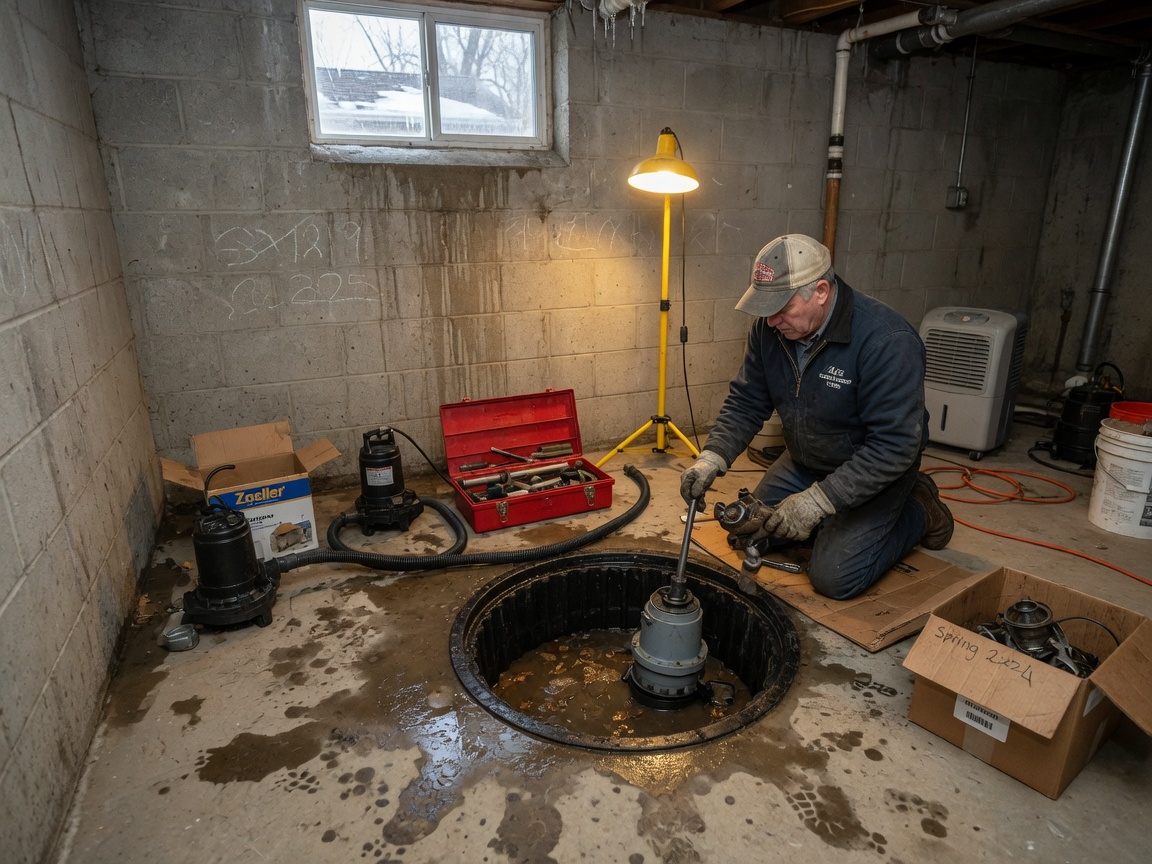
After the spring thaw in Toledo, most sump pump repairs focus on clearing ice-melt debris from discharge pipes and replacing worn float switches within the first 48 hours of detected failure. Lucas County homes near the Maumee River often see water tables rise quickly once lake-effect snow from Lake Erie melts, pushing older pumps past their limits. This timing matters because Perrysburg and Sylvania properties share similar soil saturation patterns that keep systems running longer than normal.
Thaw-Related Strain on Local Systems
Toledo's humid continental climate produces heavy lake-effect snow that melts over a short window each March and April. The resulting water volume saturates clay-heavy soils around Downtown Toledo and the Ottawa Hills border, forcing sump pumps to cycle more frequently. In Point Place, older basements built before modern waterproofing often lack proper grading, so water finds its way back toward foundations once the ground thaws. Technicians commonly find impeller wear and motor overheating after these extended run times. Checking amp draw and listening for unusual grinding helps identify units that will fail again within weeks rather than months.
Inspection Steps for Toledo Homeowners
Start by confirming the pump activates when water reaches the float switch, then trace the discharge line for blockages caused by leaves and sediment carried in by meltwater. In Old West End homes, lines often run through crawl spaces where freezing can create ice dams that only clear after full thaw. Measure the vertical lift and note any kinks that reduce flow rate below the pump's rated gallons per minute. Test battery backup units by simulating power loss to verify they handle the increased volume. Document any standing water near the foundation so patterns can be compared after the next heavy rain.
Homeowners in South Toledo should also examine the outlet point for erosion that redirects water toward neighboring lots. These checks take under an hour and reveal whether the existing unit can continue or needs sump pump replacement.
Discharge Line and Drainage Repairs
Many post-thaw calls involve crushed or clogged discharge pipes that no longer move water far enough from the house. Sump pump discharge and drainage repair addresses these issues by rerouting lines away from low spots near the Maumee River or Fifth Third Field area. Technicians often install check valves and extend outlets at least 10 feet from the foundation to prevent re-entry during the next melt cycle. In Ottawa Hills, buried lines sometimes crack from frost heave, requiring excavation and new PVC sections rated for cold temperatures.
Proper drainage keeps water away from the structure and reduces the load on the pump motor. Without these fixes, even a new unit can short-cycle and fail prematurely.
When Replacement Becomes Necessary
Pumps in Lucas County typically last 8–12 years under normal conditions, but the spring thaw accelerates wear on units already near that range. If a motor runs hot after 20 minutes of continuous operation or the float switch sticks repeatedly, replacement prevents basement flooding during the next rain event. Battery backup sump pump system additions provide protection during outages common after heavy spring storms. Choosing a model sized for the home's square footage and local water volume ensures reliable performance through the remaining wet season.